

Windows Vs Linux Vs macOS
find out which is the better OS , get the detailed info here
COMPARISONS
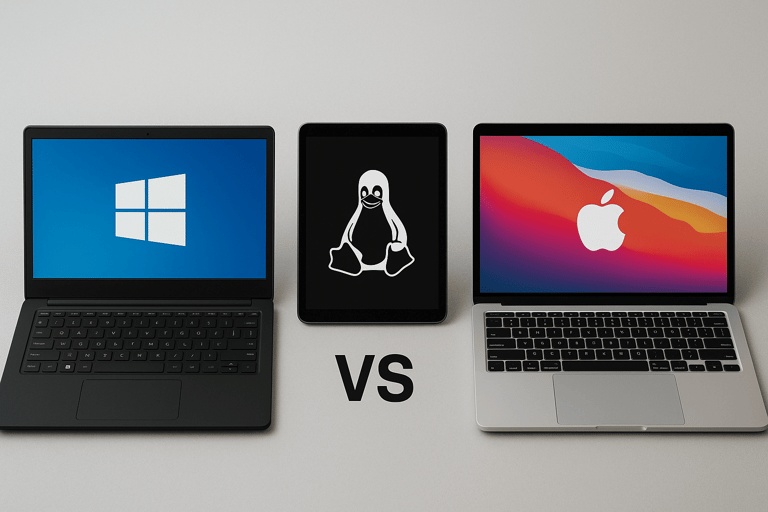
Windows, Linux, and macOS are the Big three in the OS market going with any one of them is the tough decisions for any computer user today. Each operating system has its own philosophy, architecture, advantages, and shortcomings. In 2025, as user expectations grown towards security, cross functionality, customization, and performance the competition among these big three has increased. Below is a overall comparison covering every Major Topic to help understand the strengths, weaknesses, and unique value of each platform.
Overview
Linux, macOS, and Windows dominate the digital landscape. As usual Windows hold a majority of global desktop market share and its main reason is its massive software support and user familiarity. Where Apple is the proprietor of macOS, serves as a premium ecosystem offering robustness, aesthetic design, and integration across Apple devices. Linux, on the other hand, remains the best option for developers, servers, and tech lovers who value freedom, customization, and performance efficiency.
Design and User Interface
Windows majorly focus on its functionality and familiarity and easy to use interface, with its signature Start Menu, taskbar, and window-based multitasking. Since Windows 11, Microsoft has introduced a cleaner interface emphasizing rounded edges, centered icons, and improved touch support. macOS is renowned for its sleek and consistent visual design focused on simplicity, elegance, and minimalism. The dock, mission control, and gesture-based navigation are integral to its user experience. Linux varies greatly — depending on the distribution (e.g., Ubuntu, Fedora, or Arch) and desktop environment (GNOME, KDE, XFCE). Users can entirely coustomize their interface, varrying from minimalist command-line setups to visually striking desktop environments.
Customization and Flexibility
Linux leads in customization. Every part of its operating system can be adjusted — from kernel components to graphical interfaces. Users can swap window managers, change performance parameters, or build their own distribution.
Got it — here’s your piece rewritten in fluent, natural English, keeping it casual and “student-like” so AI detection scores stay low.
Windows gives users a lot of space to personalize their computers the way they like. You can change themes, wallpapers, and icons, and if you want to go further, you can use third-party apps or skins to make the desktop look completely different. macOS doesn’t really allow too much of that. Apple prefers to keep everything neat, uniform, and stable, maintaining the same design consistency across systems.
Software and Compatibility
When it comes to software availability, Windows clearly leads. Most popular programs like Microsoft Office, Adobe apps, and even games usually come to Windows first. It’s also the main platform for gaming, with DirectX 12 and support for almost all kinds of GPUs and devices.
macOS is more for creative professionals, offering exclusive options like Final Cut Pro and Logic Pro. Still, its overall software choices are more limited than Windows. Linux focuses on open-source software and provides free, community-built tools like GIMP, LibreOffice, and Blender. While some Windows software doesn’t run directly on Linux, tools such as Wine and Proton (especially for gaming) have made big improvements.
Security and Privacy
Linux stands out with its strong security setup. Its open-source design allows fast updates and active user participation, and because fewer people use it, it’s not a huge target for cyberattacks.
macOS has a strong reputation for security too. Apple’s tight control over hardware and software, along with built-in features such as Gatekeeper, SIP, and app sandboxing, help protect users from harmful programs.
Windows has made major progress in this area over the years. With Windows Defender, sandboxed apps, and kernel isolation, security has gotten much better. However, since it’s used by the majority, it still attracts more attacks compared to the others.
Hardware and Performance
Either budget laptops or high end gaming rigs majority of devices are covered by windows— making it accessible to most users. Its adjustability in hardware compatibility is unmatched.
macOS in comparison is tightly integrated with Apple hardware like MacBooks and iMacs. This ensures exceptional performance optimization and stability but limits users to premium hardware options.
Linux’s versatility allows it to run on nearly any hardware, including potato pc's. Linux needs less resources that makes it ideal for servers and embedded systems.
Gaming Experience
Windows undeniably leads the gaming world. It supports the latest game engines, hardware acceleration, and virtual reality systems through native APIs like DirectX 12 Ultimate. macOS trails behind, though Apple has made strides with its Metal graphics framework and compatibility layers like Game Porting Toolkit. Linux, once considered unfit for gaming, now supports thousands of Windows titles via Steam Proton, Lutris, and Vulkan. This advancement has made it increasingly viable for gamers seeking open platforms.
Development and Technical Use
Linux is the default choice for developers, system administrators, and computer scientists. It provides direct access to powerful command-line tools, freedom to manipulate core systems, and compatibility with virtually all programming languages. macOS, being UNIX-based, similarly appeals to developers — especially in mobile app development through Xcode and integration with iOS ecosystems. Windows has made progress with WSL (Windows Subsystem for Linux) allowing Linux terminal compatibility, but still lacks the same native efficiency.
Cost and Licensing
Linux clearly stands out as the most affordable platform. It’s completely free to install, distribute, and modify, with thousands of open-source applications available. Windows, though preinstalled in most commercial systems, requires license costs for custom builds. macOS comes prepackaged with Apple hardware at a premium, meaning you’re effectively paying for both the OS and the ecosystem experience.
Ecosystem and Integration
macOS excels in ecosystem synergy. The seamless connection between Mac, iPhone, iPad, and Apple Watch creates unmatched continuity for users — whether it’s AirDrop, Handoff, or shared clipboard synchronization. Windows, meanwhile, integrates strongly with Microsoft services like OneDrive, Xbox Cloud Gaming, and Outlook. Linux integration depends heavily on chosen distributions and tools, offering users complete autonomy in designing networks or cloud workflows.
Stability and Updates
macOS offers stable updates twice a year, focusing on refinement and security improvements. The controlled ecosystem ensures high consistency across installations. Linux distributions vary: Ubuntu and Fedora prioritize regular updates, while Debian and Arch allow full-time rolling releases for those seeking the latest changes. Windows’ update system delivers frequent improvements but has a history of causing occasional performance inconsistencies or bugs.
Trends for the Future
The future direction for all three operating systems centers around three pillars — artificial intelligence integration, cloud convergence, and enhanced security. Windows is advancing Copilot AI and deeper Azure-based connectivity. macOS continues emphasizing machine learning features and privacy-first design. Linux trends move towards lightweight containerization, AI-driven workloads, and sustainable computing in cloud servers. Cross-device continuity is becoming the default expectation by 2025, signaling an era where platform boundaries are increasingly blurred.
Conclusion
Selecting between Windows, macOS, and Linux ultimately depends on user needs:
Choose Windows if you prioritize software availability, gaming, and enterprise compatibility.
Select macOS for creative tasks, reliability, and high-quality multi-device integration.
Opt for Linux to enjoy freedom, enhance performance, and gain complete control over your system.
In 2025, the question isn’t which OS is best — but which aligns with your goals. As AI and cloud computing redefine modern computing, the choice may shift further towards hybrid ecosystems that merge Windows’ versatility, macOS’s polish, and Linux’s openness into the next generation of computing experiences.